One Day in Turin’s Royal Quarter — Why it Changes How You See Italy
The royal palace, the Armeria Reale, Guarini’s impossible dome and a long Piedmontese lunch at a table locals protect fiercely. This is how to experience Turin properly.
Palazzo Reale Turin rivals Versailles in ambition. The Armeria Reale holds one of Europe’s finest collections. And Guarini’s dome is the most extraordinary room in Italy that most visitors overlook.
This is the day we build for guests who want to experience Turin properly — privately, unhurriedly, with the right people guiding every hour of it.
Turin’s Royal Quarter
There is a version of Italy that the world knows well. Rome’s forums, Florence’s galleries, the Amalfi coast at golden hour. It is beautiful. But, it is also increasingly shared with several million other people.
Then there is Turin.
Italy’s first capital sits two hours northwest of Milan, unhurried and aristocratic, largely unmolested by fast tourism.
Turin’s royal quarter — a single, extraordinary concentration of Baroque architecture, world-class collections and culinary genius — rivals anything on the Italian peninsula.
The day described here is the day we build for guests who have done Italy and want to understand it differently. It is precise, unhurried and entirely private.
The day begins at nine and ends, glasses in hand, in one of the most beautiful nineteenth-century arcades in Europe.
This is , without question, one of the finest days we offer anywhere in northern Italy.
Palazzo Reale — Power, Dressed in Damask
The first lesson Turin teaches is restraint.
The facade of Palazzo Reale keeps its Baroque modest — creamy stone, regular windows stretched long and low — so the interior hits harder.
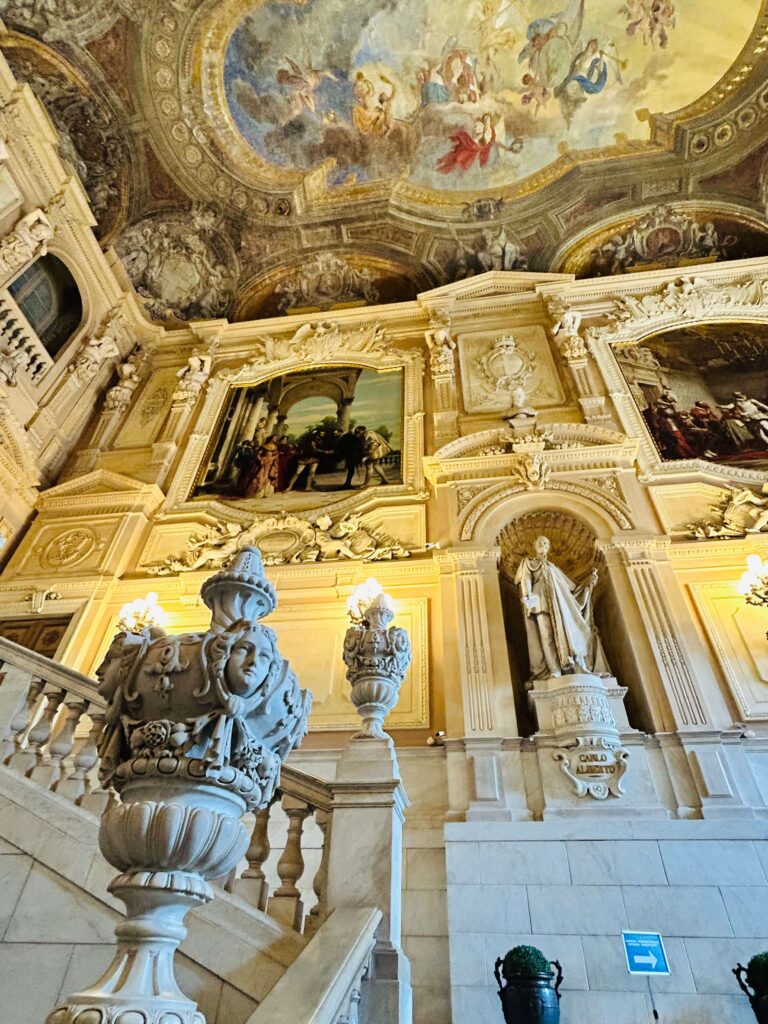
Walk through the gates of Piazzetta Reale at nine o’clock, before the city has properly woken, and this contrast is everything. The square is quiet. The light is still low. The palace waits.
Our guests enter with a private guide — a local art historian whose relationship with these rooms spans decades. The difference this makes cannot be overstated.
The Royal Apartments hold exquisite frescoes, tapestries and furnishings. The Throne Room, the Ballroom and the private royal apartments each carry their own story of power and taste.
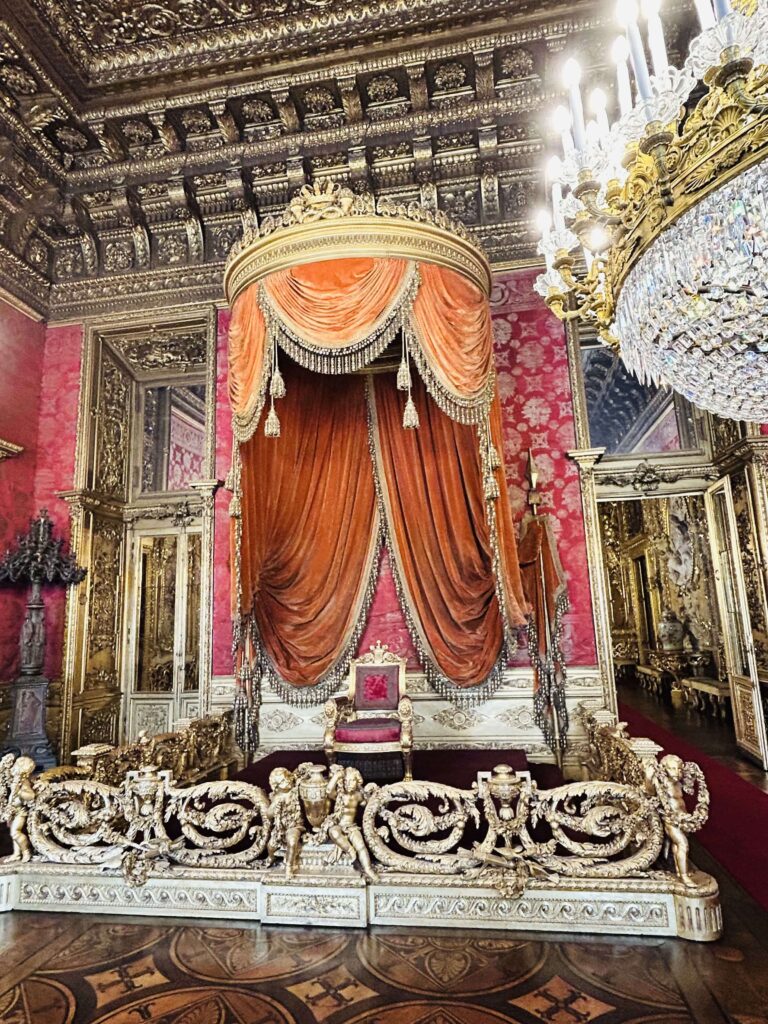
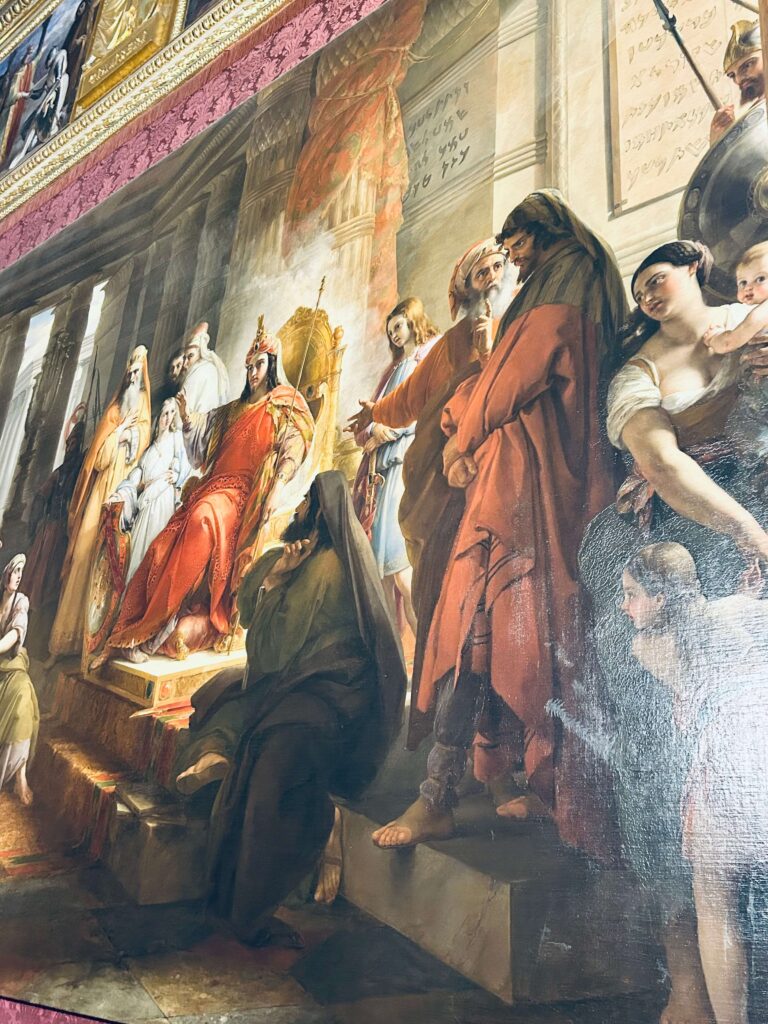
With the right guide, those stories become vivid and personal. Without one, they remain beautiful surfaces.
Gilded ceilings swallow light. Damask walls glow blood red. Marquetry floors click underfoot.
The House of Savoy ruled from here for over two centuries and collected with the compulsive confidence of a dynasty that believed its reign would never end — Flemish tapestries, Chinese lacquer, parade armour never touched by war.
The scale shifts as you move deeper. Private chambers follow imperial halls.
The Armeria Reale — What Power Actually Looked Like
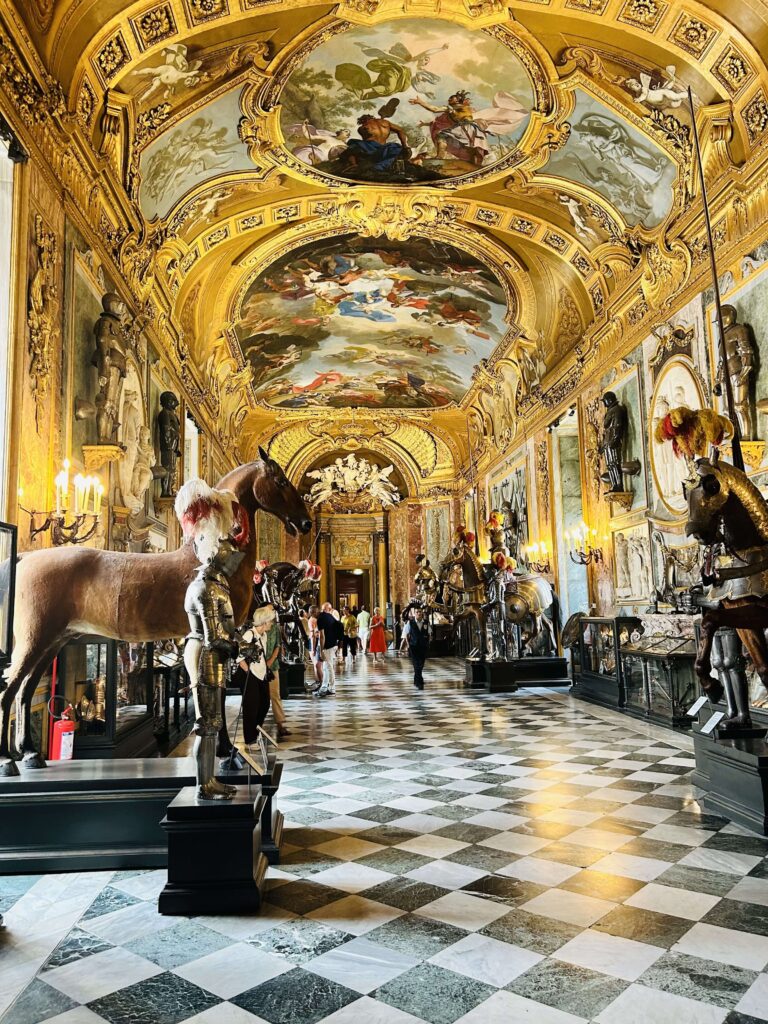
From the gardens, the itinerary moves upward into the Armeria Reale — and into one of the most significant collections of its kind in the world.
We build an hour into the Armeria Reale. Frequently we stay longer.
The Armeria Reale holds one of the most important arms and armour collections in Europe, with exceptional pieces from the 16th and 17th centuries. Serious collectors and military historians travel specifically to stand in these rooms. Our guests discover them as a revelation.
The full plate armour suits reward close attention.
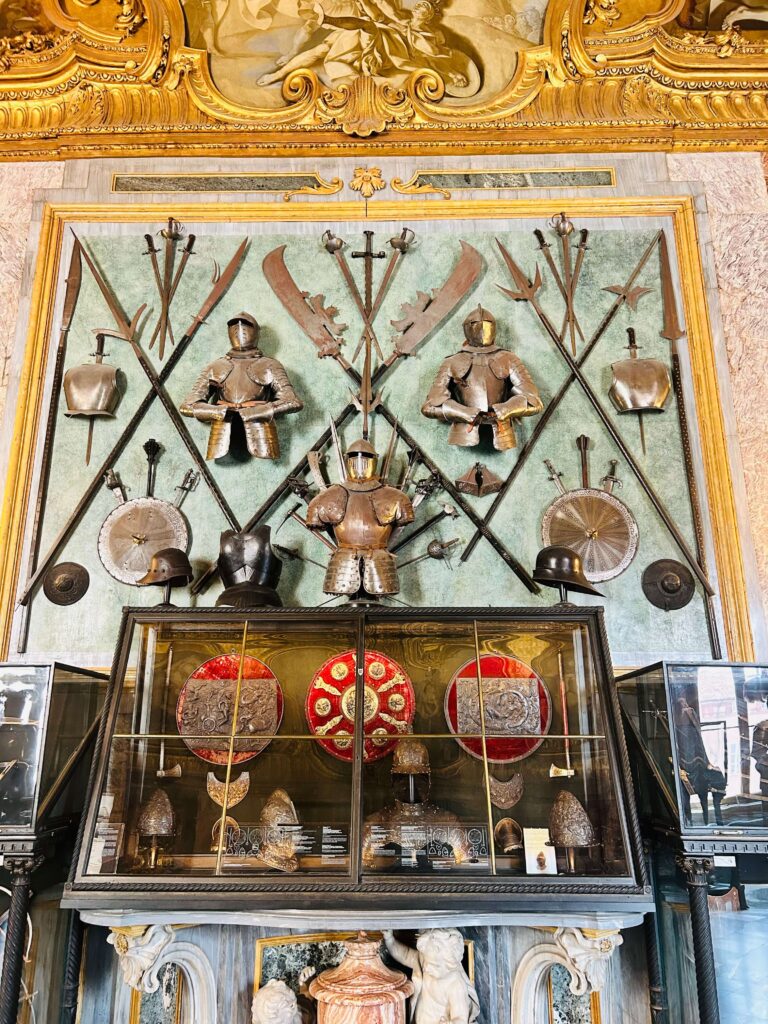
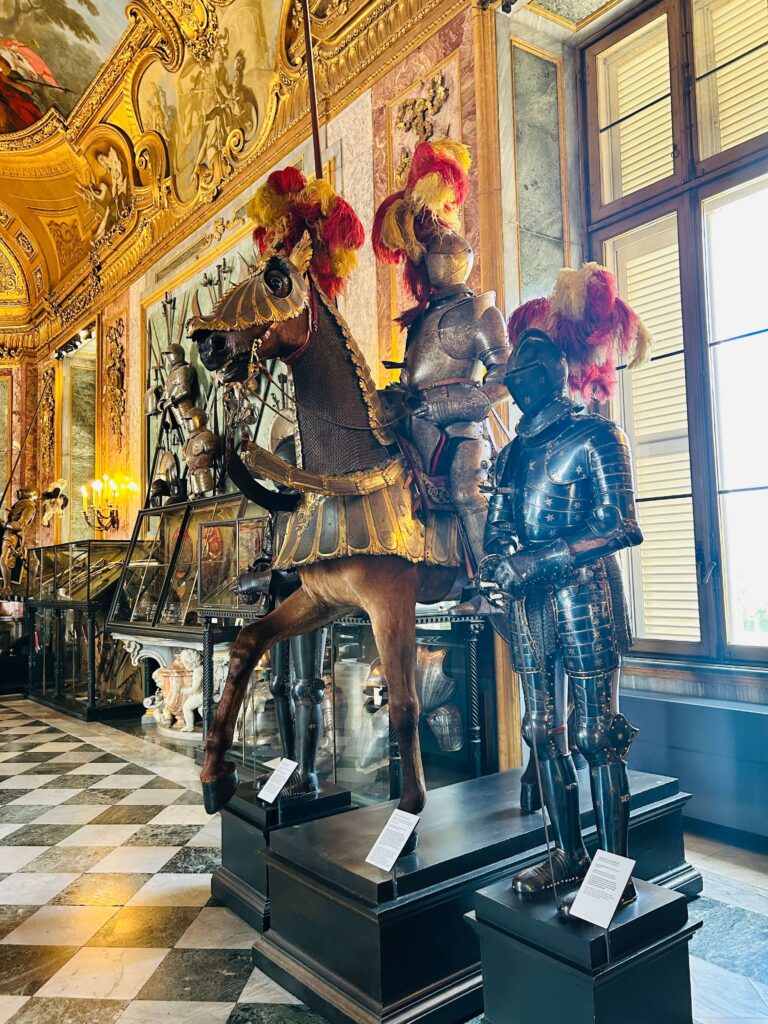
These were not instruments of warfare — they were the most expensive diplomatic communications of their era, hammered into steel by craftsmen whose names history has largely forgotten.
Each piece was designed to project authority across a room before a word was spoken. Seen up close, with context, they function less as objects than as portraits.
Behind the palace, Royal Gardens roll north in perfect geometry. These were designed by André Le Nôtre, the same man who created the gardens at Versailles.
The gardens are almost always empty. It is one of the great unwitnessed views in European travel — and the right place for a short pause before lunch.
Lunch — The Table That Does Not Appear in Guidebooks
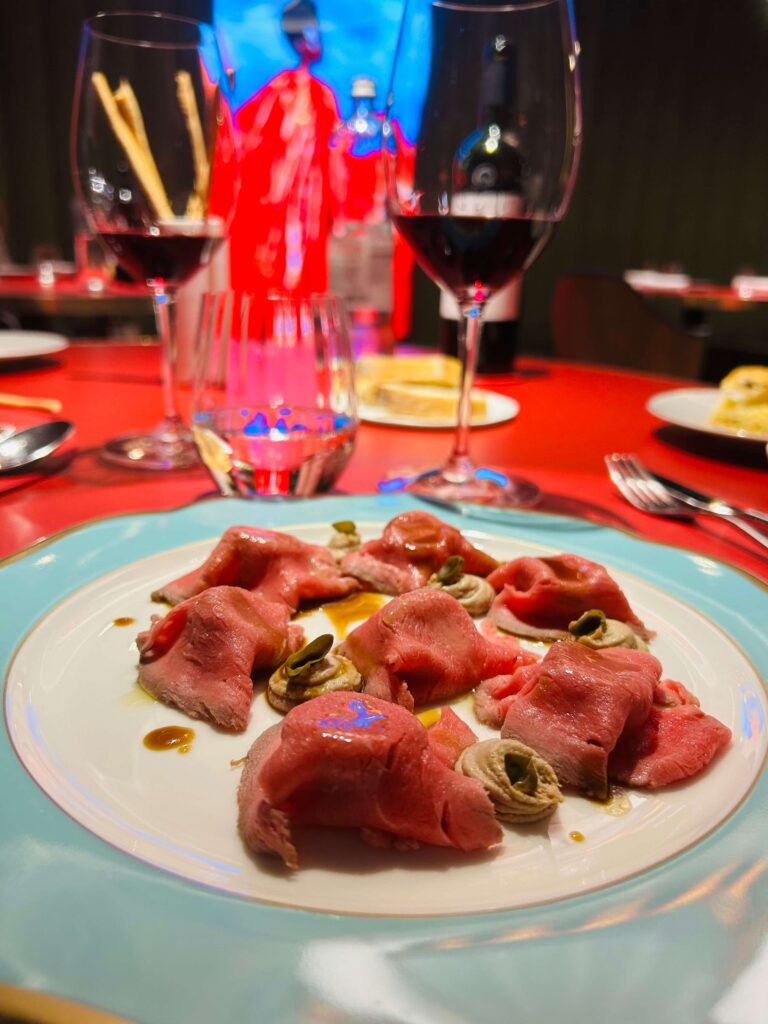
By twelve thirty, we leave the palace complex and walk five minutes into the city.
This lunch is not a pause in the day. It is its centre of gravity.
Piedmontese food culture is built around the pleasure of the table as a serious, unhurried pursuit — and understanding that culture is inseparable from understanding Turin itself.
The restaurant we use for this day does not require naming here.
What matters is what it represents: an exceptional room where the cooking is rooted in Piedmontese tradition and executed with the kind of precision that comes from decades of practice rather than culinary school ambition.
This is where Turin’s architects, lawyers and winemakers eat on a Tuesday. It does not advertise. It does not need to.
Vitello tonnato made the correct way. Tajarin— egg-yolk pasta of extraordinary fineness — and a Barolo from a small producer that no sommelier outside Piedmont has yet discovered. A dessert built around Langhe hazelnuts.
The wine list does not venture far from the region. There is no reason it should.
A couple of hours at this table is the standard. The conversation rarely allows less.
Guarini’s Dome — The Architecture That Defeated Physics
The afternoon belongs to Guarino Guarini — and to the most extraordinary room in Turin.
Guarini was an architect, priest, mathematician and theologian — and the most intellectually formidable designer of 17th-century Italy.
He studied in Rome at the height of Borromini’s radicalism. And he encountered the structural geometry of Córdoba’s great mosque.
He brought both influences to Turin and produced something that has not been replicated anywhere, at any point in the subsequent three and a half centuries.
Architecture scholars travel from across Europe to stand here.
From the dark marble floor adorned with bronze stars, the eye rises gradually toward Guarini’s dome — a sequence designed to evoke the ascent from earth to heaven.
The dome is unlike any other structure in the world: six levels of hexagons, each composed of six arches, stacked at alternating angles. By manipulating the proportions of each layer, Guarini created the illusion of a tunnel extending far beyond the building’s actual size.
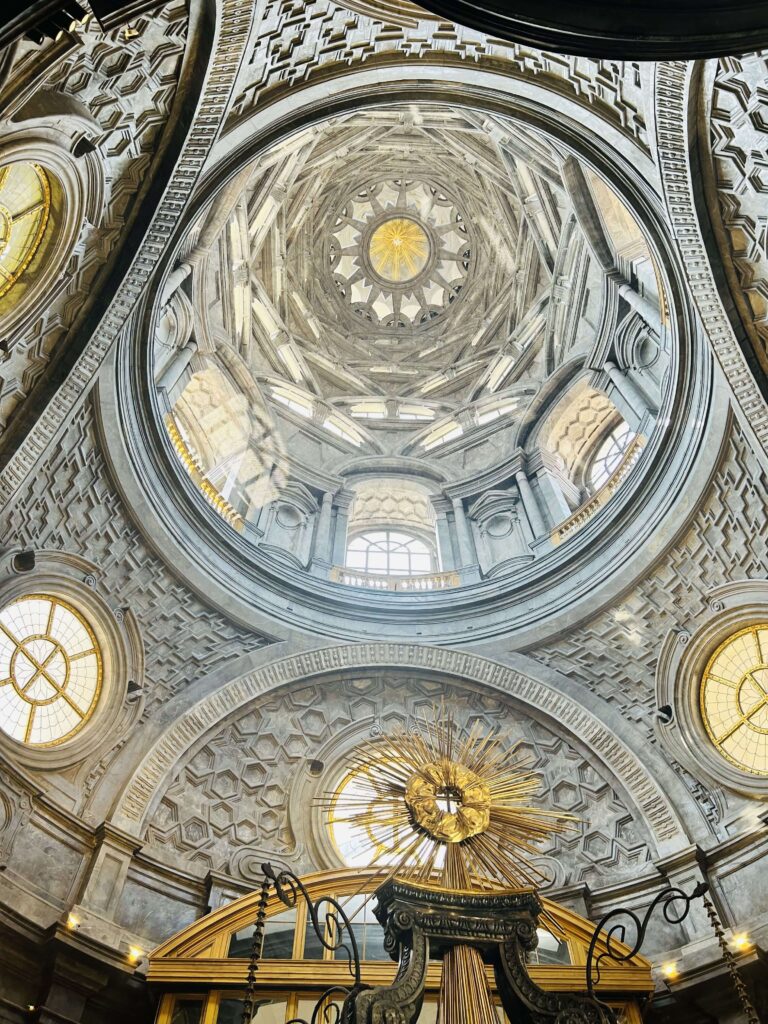
Stand beneath it. Look up. The dome appears twice the height it is. A capacity to make space feel infinite.
Light moves through openings whose geometry shifts as the sun moves outside. The walls seem to breathe.
This Chapel is the room that held the Holy Shroud of Christ up until 1993.
Our guests find it on a Wednesday afternoon with no queue, no noise and a guide who has spent years thinking about what Guarini was actually doing. That combination — the right place, the right moment, the right context — is the whole proposition of a day with us.
Guarini’s genius at Chiesa di San Lorenzo
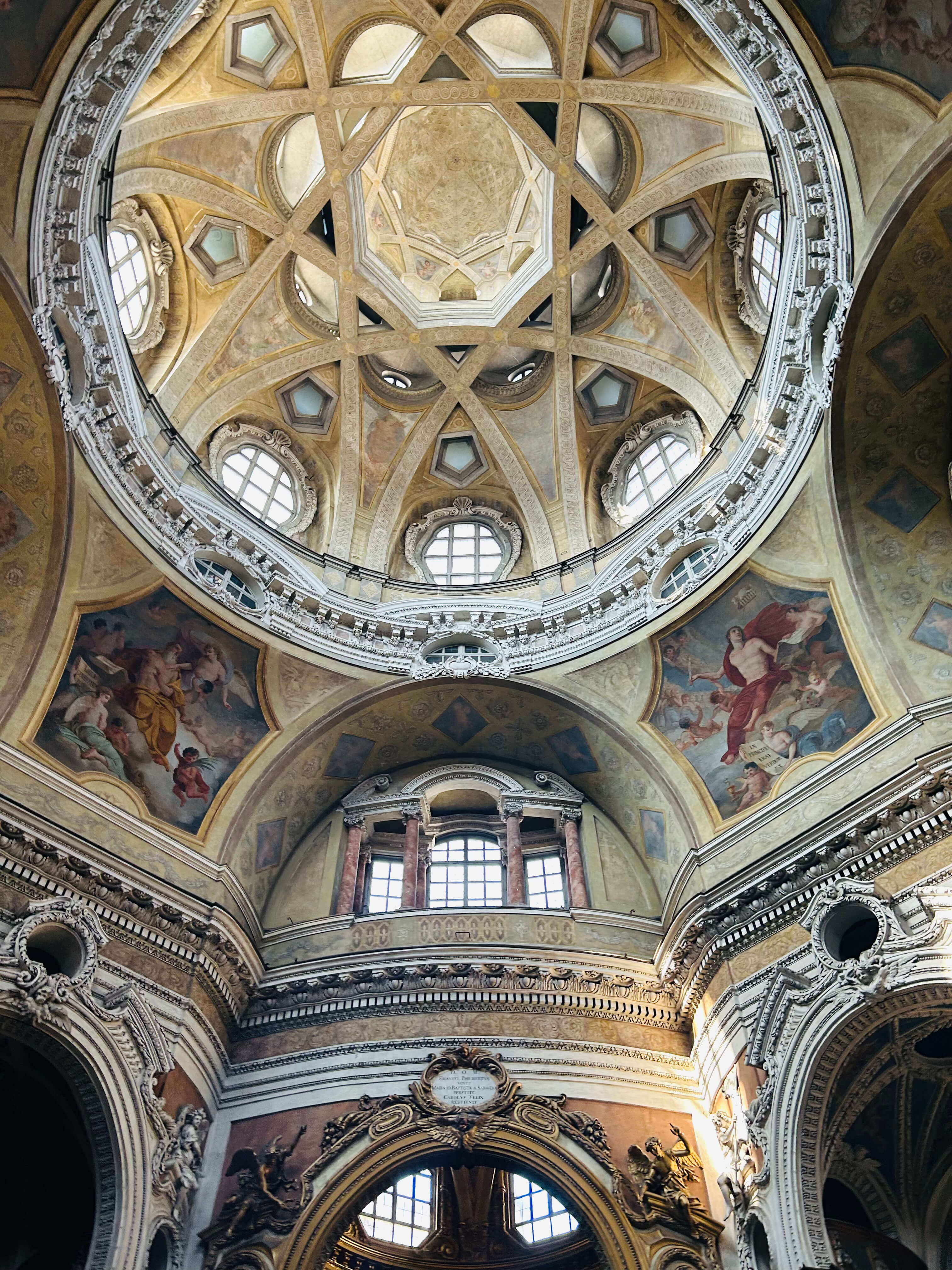
Before heading to dinner, we have one last stop. The Chiesa di San Lorenzo is another incredible architectural gem from the genius of Guarino Guarini.
This is a true masterpiece, that most tourists will overlook.
It is hard to spot, so only even the most careful eye will struggle to notice. Furthermore, it looks very modest from the outside. So very few people will ever think of entering.
By visiting this church with our private guide, you will realize the complexity of the way it was designed and the reason behind it. Here you will learn the kind of story that you cannot wait to tell your family and friends about and that you will cherish for the rest of your life.
Evening — Aperitivo in the City That Invented It
Turin did not borrow aperitivo from somewhere else. It created it.
Vermouth was formulated here in the eighteenth century. Campari was born here.
The ritual of the pre-dinner drink — something bitter, something cold, a marble bar, a high-ceilinged room — is a Turinese invention that the rest of the world has been imitating imperfectly ever since.
We end the day with the perfect Aperitivo followed by the Dinner you will never forget.
The setting is simply stunning — inside a nineteenth-century arcade of such quiet magnificence that its continued existence as a functioning restaurant rather than a museum seems hard to believe.
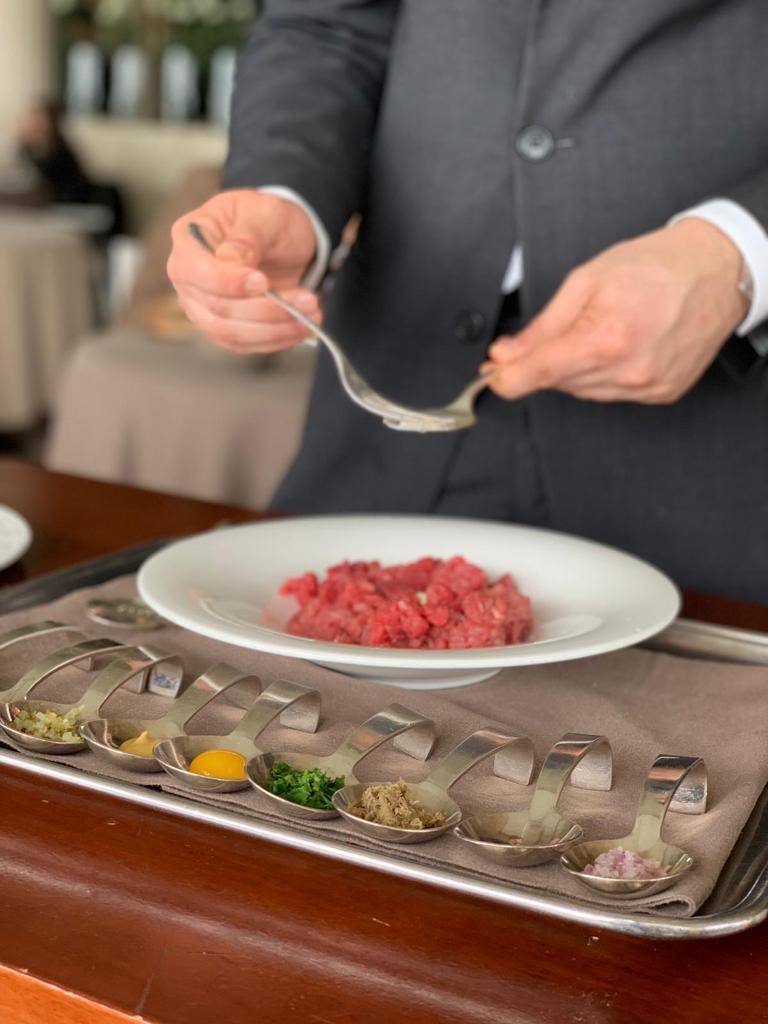
A vermouth served properly, in a room that smells of old wood. The bar staff know what they are doing. The room does the rest.
Dinner follows, at a table selected for you specifically.
We know these rooms. We know which table to request, which dishes to order and which producer’s wine to ask for by name.
The evening is yours to direct. We simply ensure the infrastructure is exactly right.
This Day, As Part of a Larger Trip
This is the cultural heart of our Turin weekend — the day we build around the stay at the city’s most singular boutique hotel: a restored 15th-century palazzo in the Quadrilatero Romano.
It pairs naturally with a second day that moves out of the city entirely — into the Langhe vineyards, to a private Barolo tasting at a family estate, long lunch above the vines and the most unforgettable dinner.
Two days. One city. The version of northern Italy that most visitors never find.
To begin visit our Experiences page.
Useful External links to Learn More
- Official Royal Museums Turin: museireali.beniculturali.it/en
- Real Chiesa di San Lorenzo: sanlorenzo.torino.it