Private Langhe Wine Tour — Barolo Country, Your Way
A cellar that has never advertised. A private table under a tree and a chef cooking just for you. A balloon drifting over the Barolo’s vineyards. Pasta you made yourself, still warm. This is how we build the Langhe half of the journey.
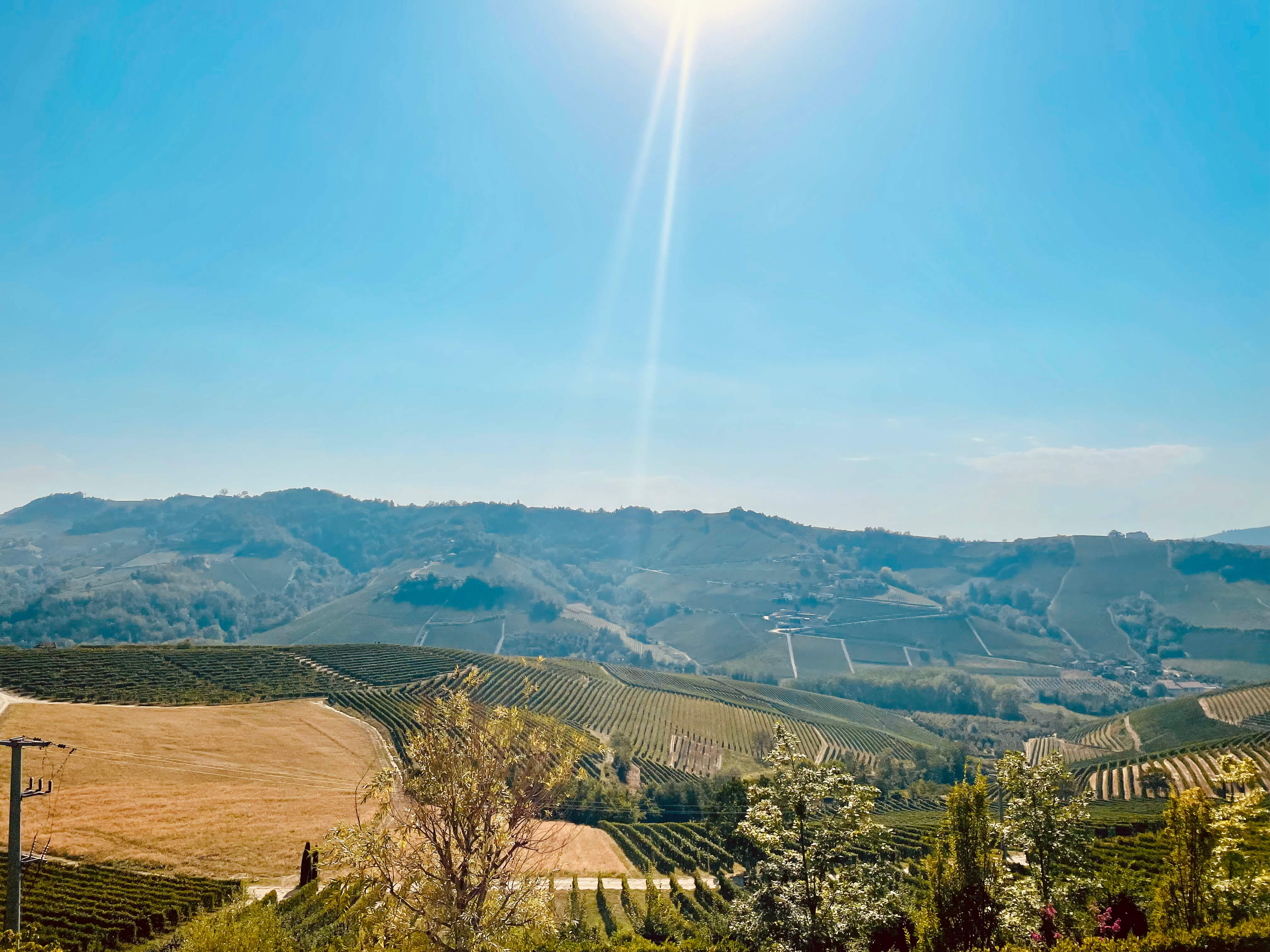
Barolo and Barbaresco sit less than two hours south of Turin. They are two of Italy’s most serious wines. Yet most visitors to Italy never set foot here.
That is exactly why this private Langhe wine tour exists. It takes guests who already love Turin. It shows them where the wine, the truffle and the slower pace come from.
The shape of the trip is not fixed. Some guests spend two nights in Turin and three in the Langhe. Others reverse it. The experiences below are choices, not a checklist.
We build each stay around what a guest actually wants, across three, four or five days total.
Quick Facts
- Total trip length: 3–5 days, split between Turin and the Langhe however a guest prefers
- Best season:
- September–December for truffles and harvest;
- April–October for balloon flights and vineyard color
- Starting point: Turin, less than a 2-hour drive north of the Langhe
- Region status: UNESCO World Heritage Site since 2014
- Core wines: Barolo and Barbaresco, both made from the Nebbiolo grape
- Group size: private. Tailored to one party at a time
Leaving Turin Behind
The drive south takes under two hours. It is not filler. It is the transition the whole trip is built around.
First, flat farmland rolls past the window. Then the first low hills appear. Suddenly, the Langhe opens up ahead.
This region became a UNESCO World Heritage site in 2014. Vineyards run in long rows up every slope. Medieval towers break the horizon. Farmhouses match the color of the earth beneath them.
There is no traffic. There is no queue for anything.
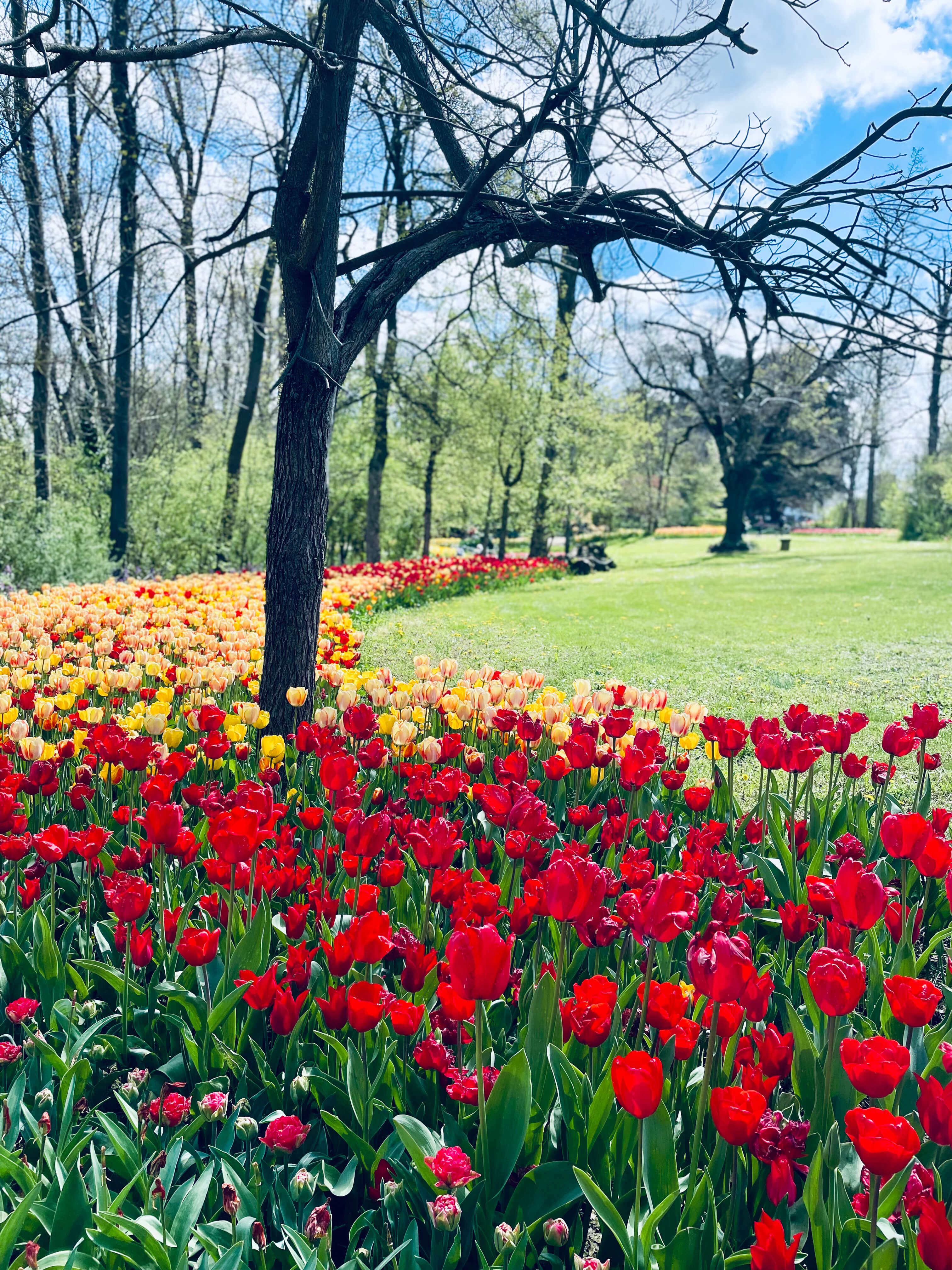
For guests who prefer the quieter route, the drive can also pass through a small village built around a thirteenth-century castle still lived in today by the family that has owned it since the 1680s. Each spring, the family opens its private park for roughly a month, when more than 130,000 tulips and daffodils come into bloom. It’s a brief detour and during bloom, one worth building the morning around.
Once you arrive, we check you into an estate above the vines. This is not a hotel that merely overlooks them. It is a home built into the landscape itself.
Slow mornings here mean exactly that. You drink coffee on a terrace. You feel the wind move through the rows. Nothing starts before ten.
The Cellar That Doesn’t Do Tours
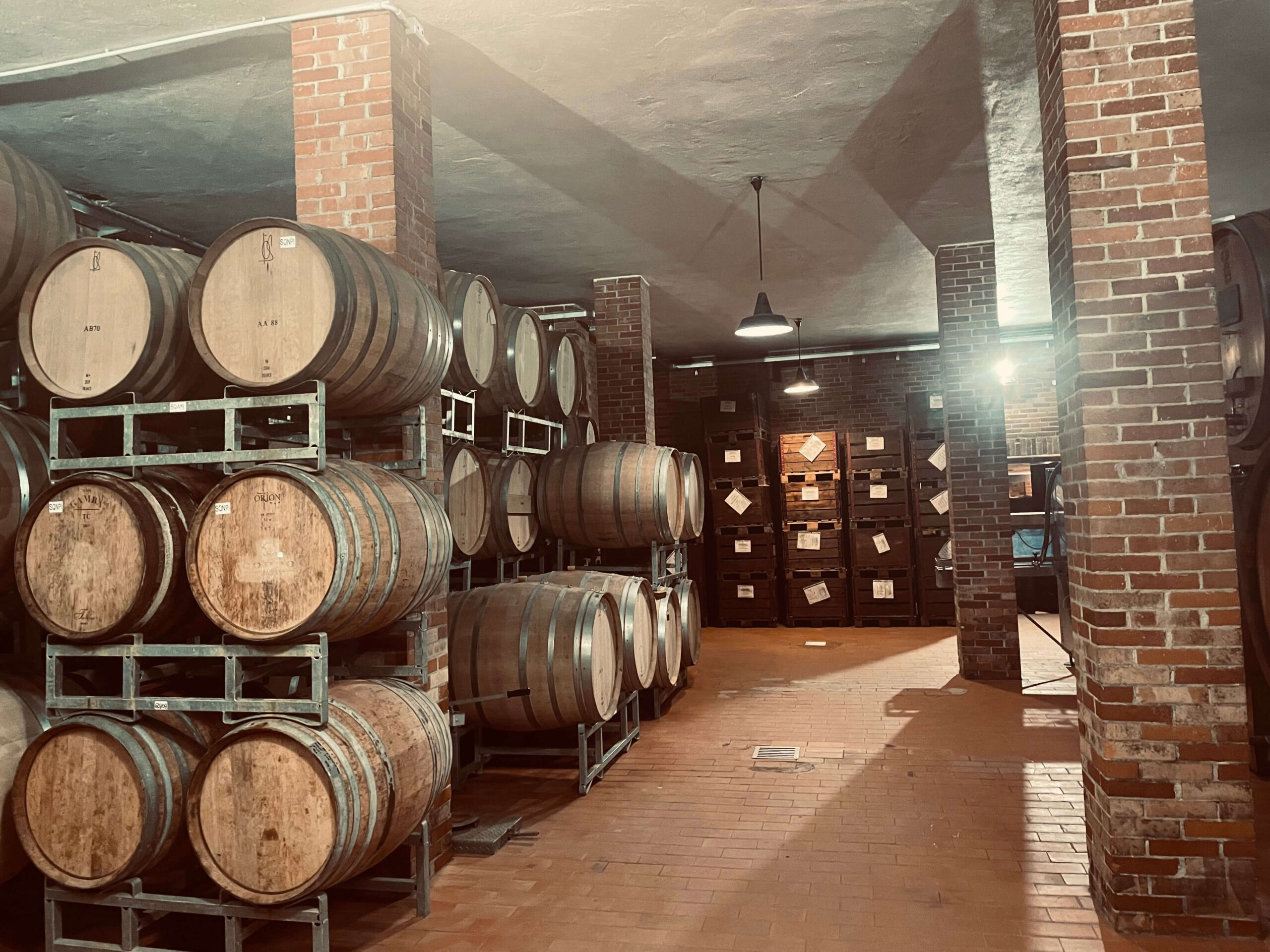
Most visitors to the Langhe end up at the same few producers. They see tasting rooms,gift shops and a tour bus parked outside.
Our private Langhe wine tour takes guests somewhere else entirely.
We work with small, often single-vineyard families. They rarely export beyond a short list of trusted relationships. Many built these relationships over decades.
Other winemakers quietly buy these same labels for their own tables. Serious collectors recognize these names instantly. Casual drinkers have often never heard of them.
You walk into the cellar itself. The cellar smells of damp stone and old oak. Bottles rest in darkness for years before anyone outside the family sees them. The air stays cool and still, even in August.
Then you taste straight from the source. The person pouring your glass is the same person whose name sits on the label. This is not a scripted tasting menu. It is simply a conversation, with wine as the subject.
Where to Stay
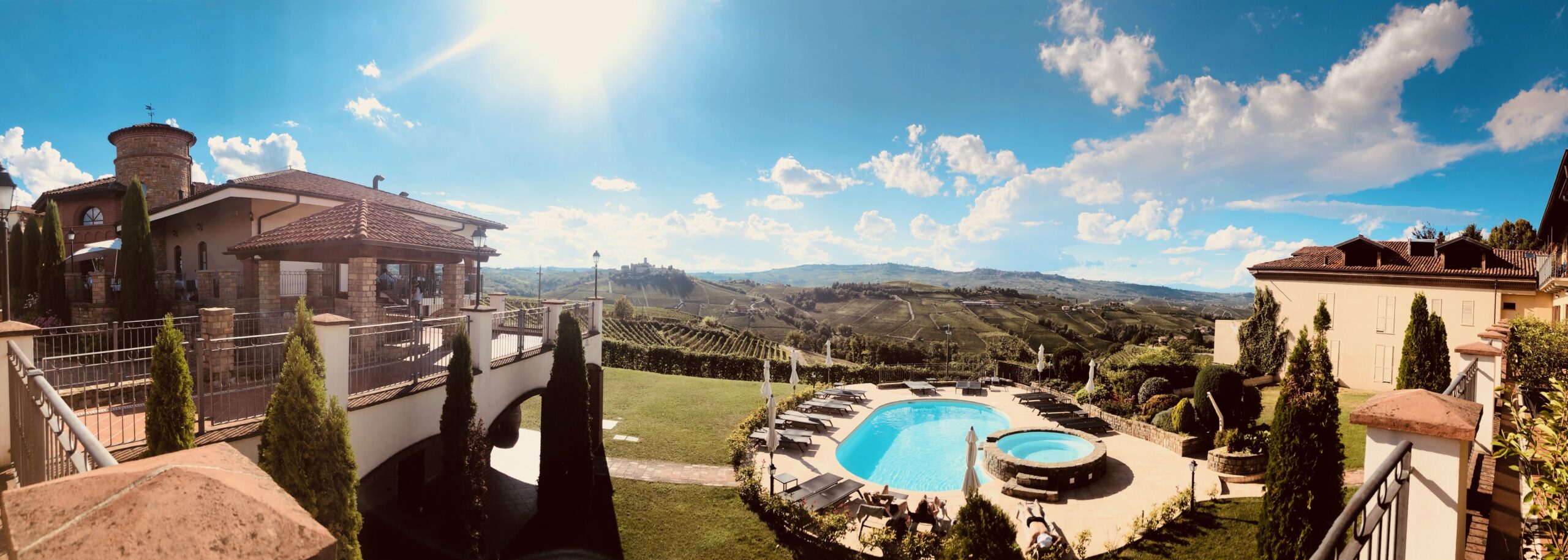
The Langhe rewards guests who sleep close to the vines, not in a town center hotel. We place guests in one of a small number of property types, chosen for setting as much as comfort.
Some are historic estates, fully restored, with a Michelin-starred restaurant built into what was once a monastery. Others are smaller and quieter: a handful of rooms above a working vineyard, or a farmhouse turned boutique relais.
Every property we use sits inside the vineyards themselves, not beside them. Breakfast usually includes something made on site, whether that is bread, jam or the estate’s own hazelnut spread. A pool, a small spa or a private garden is common. A crowd of other guests is not.
We match the property to the guest, not the other way around.
A couple wanting total privacy stays somewhere different from a family of six, and both stay somewhere different from a guest arriving mainly for the cellar relationships and the food.
Choose Your Pace
Every stay includes a way to move through the landscape, not just look at it. No stay includes everything below. Each guest picks the pieces that suit them.
Some mornings begin above the hills entirely. From September through May, we can open a stay with a sunrise hot air balloon flight over Barolo. You drift silently above the vine rows for a full hour, medieval towers and Barolo Castle unfolding beneath you across the UNESCO landscape. It belongs to no category but its own.
For Those Who’d Rather Slow Down
Guests who want the Langhe without the exertion have two options of their own.
A self-drive vintage Fiat 500 carries you along quiet vineyard roads. This car was built two hours north, in Turin itself, and now carries you through the hills that made its home region famous.
And for a single unhurried afternoon, we can arrange a private lunch beneath a Lebanon cedar planted in 1856 above La Morra which locals consider a symbol of the region itself. A private chef cooks the meal fresh on the spot, with the table set beneath the branches and with views running across Nebbiolo vines.
For the Active
Guests who want to cover ground choose between two options, both led by a local guide who knows the terrain.
A private e-bike ride runs through Barolo, La Morra and Barbaresco. Electric assistance handles every climb, so hills are never a problem.
A guided hike through the Barbaresco hills offers the same landscape on foot, ending at a cellar door for a proper tasting. Vine to glass, entirely on foot, at whatever pace the group sets.
Seasonal
From late September through December, the Langhe adds a third rhythm entirely.
The hunt for white truffle. A local trifolau leads guests through oak woods with his trained dog, followed by a lunch built around whatever the ground gives up that morning.
During harvest, in the same window, guests can also work the vines directly alongside the pickers. Both experiences depend on the calendar, not on request.
The Villages Around the Wine
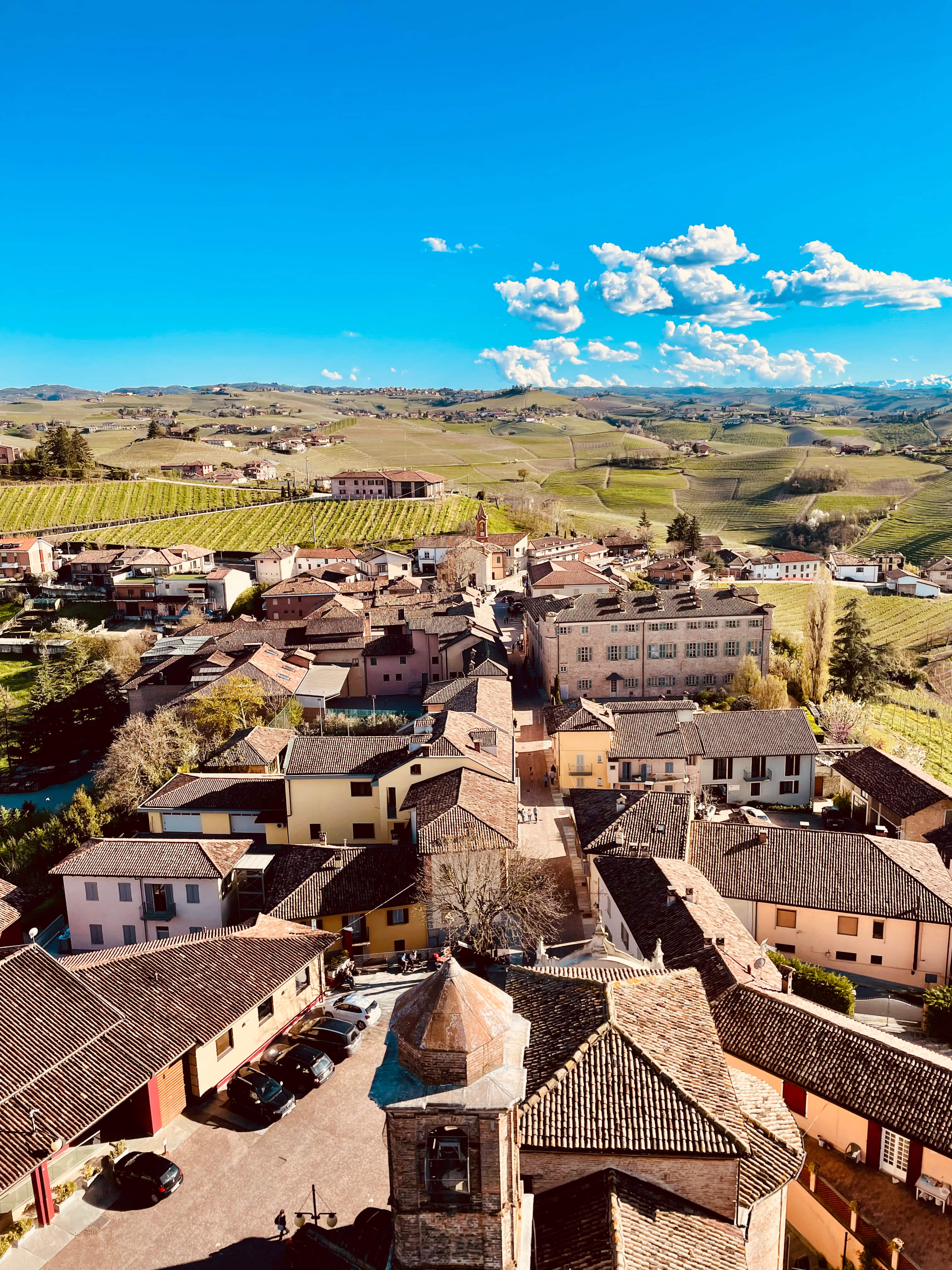
The wine estates sit inside a landscape worth exploring on its own terms, village by village.
Grinzane Cavour centers on an eleventh-century castle, later home to Camillo Benso di Cavour, the statesman who helped unify Italy and championed Barolo along the way.
Serralunga d’Alba is built around a magnificent fourteenth-century castle. The village itself wraps around it in concentric rings, a defensive layout that still shapes how you walk through town today.
Neive keeps its medieval street plan intact with a clock tower marking the center. Guests often add a slow half hour here, walking rather than touring on the way between cellar visits.
Alba, — A City Day in the Wine region
For guests who want a city day rather than just vineyard days, Alba is the perfect stop.
Alba is the region’s capital and its culinary center, still built on a medieval street plan with towers rising above the rooftops. In autumn, the town runs its International White Truffle Fair, and the market fills with white and black truffle, local cheese, wine and salumi from across the region.
Outside truffle season, the town works just as well as a half-day of proper shopping and eating. Historic truffle shops, chocolate and hazelnut specialists, and small boutiques line the streets around the center.
Guests looking for something more curated can add a private guided food walk through the center, moving between a handful of specialty shops with tastings along the way. It pairs naturally with an afternoon of shopping, or with lunch at one of the town’s higher-end restaurants before heading back to the vines.
For guests who want the single best table in the region, Alba holds it. Piazza Duomo, led by chef Enrico Crippa in partnership with the Ceretto wine family, carries three Michelin stars, the only restaurant in Piedmont to hold them. The kitchen draws on its own three-hectare garden outside town, harvested each morning. Tables are genuinely difficult to secure, released three months in advance on a fixed date and gone within minutes. We build this into a stay only when a guest wants it specifically, and only once the date is confirmed.
A Morning With Flour on Your Hands
Some guests want to leave with more than memories. For them, we arrange a private cooking class instead of, or alongside, a cellar morning.
A local instructor teaches the basics of egg pasta by hand. Guests knead the dough themselves. From there, the class shapes two Piedmontese classics: tajarin, cut impossibly thin, and ravioli del plin, pinched closed one by one.
Lunch follows immediately, built entirely around what guests just made. A certified sommelier then leads a short wine masterclass, pouring three artisanal wines made from native Piedmontese grapes.
This is not a demonstration. Guests do the work themselves, flour on their hands, and eat the result an hour later.
Evening — Aperitivo Above the Vines
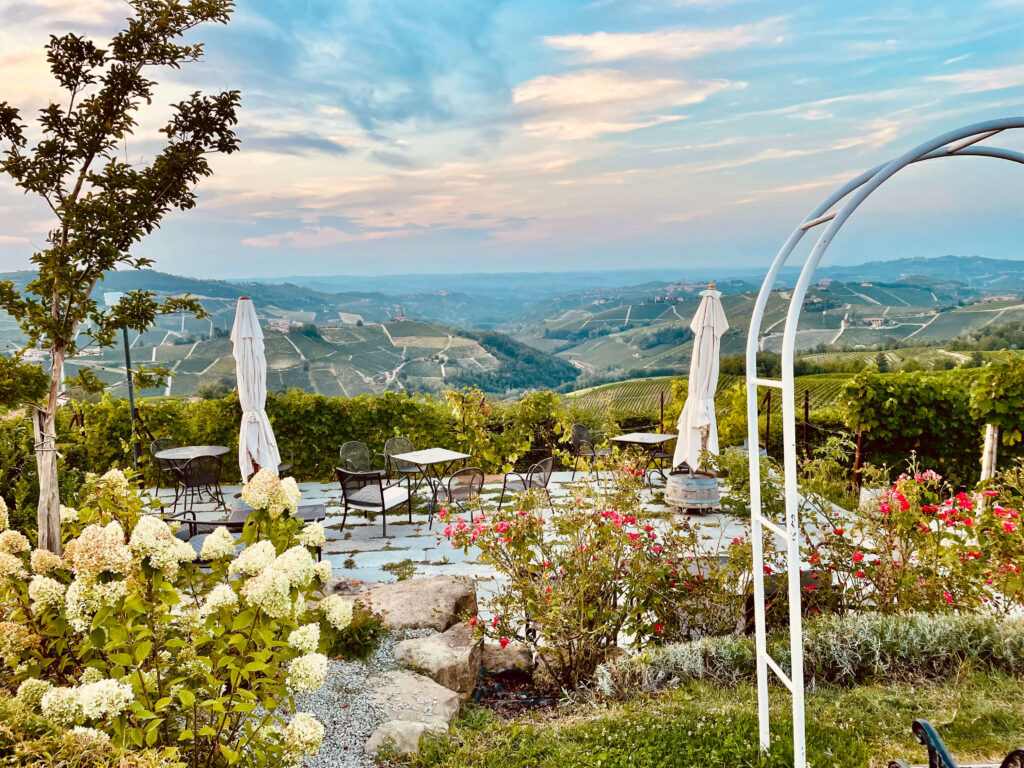
As daylight fades, Barolo country turns a shade of gold that photographs rarely capture. You need to see it directly.
Guests sip the region’s own wine on a terrace overlooking the vines, right before dinner begins.
Dinner itself draws solely on local ingredients.
We already know which tables to request. We already know which vintages deserve to be asked for by name. Because of this, you never have to guess.
This Journey, Built Around You
This private Langhe wine tour is not a fixed script. It is a set of pieces a guest chooses from spread across as many days as the trip allows.
Some guests spend two nights in Turin and three among the vines. Others prefer the reverse. A cellar morning, a balloon flight, a hike or an e-bike ride, a cooking class, a truffle hunt, an afternoon beneath the cedar, a day in Alba: no single stay includes everything, and that is by design.
What stays constant is the standard behind every choice. Private access. Family relationships built over years, not booked through a form. A pace that never feels like a schedule.
Turin and the Langhe together form one region. This is the version of northern Italy that most visitors never find.
For the first half of the journey, visit our Bespoke Turin Travel page
Schedule a call
Every journey starts with a conversation. Tell us your dates, and we’ll build the rest around you. To begin planning your own private Langhe wine tour, Schedule a call with us.
Frequently Asked Questions
How long is a private Langhe wine tour?
Most guests spend two to three days in the Langhe as part of a longer trip. The full journey, including Turin, usually runs three to five days, split however the guest prefers.
What is the best time of year to visit Barolo and Barbaresco?
Late September through November brings harvest and white truffle season together. This is the most immersive time to visit. Spring and early summer offer greener vineyards and quieter roads, with balloon flights running from September through May.
Do I need to know a lot about wine to enjoy this tour?
No. A private Langhe wine tour works for both serious collectors and curious beginners. Each visit is shaped around the guest, not a fixed script, so a producer will pitch the conversation at whatever level fits.
Can Turin and the Langhe be combined in one trip?
Yes. Turin and the Langhe sit less than two hours apart and pair naturally. Some guests split the trip evenly. Others spend more time in one place than the other. There is no fixed ratio.
Is transport included, or do guests need to rent a car?
Private transport is arranged for the entire trip, including the transfer between Turin and the Langhe. Guests do not need to drive unless they choose the self-drive vintage Fiat 500 option as part of the day itself.
Is there anything to do beyond wine tasting?
Yes. Guests can add half-day stops in medieval villages like Grinzane Cavour, Serralunga d’Alba and Neive, or spend a day in Alba itself for food, shopping and its historic center. These pair naturally with cellar mornings and do not require an extra night.
Useful External Links to Learn More
- UNESCO World Heritage listing, Vineyard Landscape of Piedmont: whc.unesco.org
- Barolo & Barbaresco Consortium: langhevini.it
- WiMu, the Barolo Wine Museum: wimubarolo.it